What is TRT? Testosterone replacement therapy (TRT) is a medically supervised treatment that raises your serum testosterone to a normal physiological range when your own body no longer produces enough. It is prescription medicine — ordered only after a confirmed blood-test diagnosis of low testosterone (clinically called hypogonadism) — not a supplement stack or a performance shortcut. If you have been searching "what is TRT" and getting overwhelmed by gym-bro forums and vague marketing copy, this guide cuts through all of it.
Independently researched · Updated July 2026 · Affiliate disclosure
What is TRT and how does it work?
Testosterone is the primary male sex hormone (androgen). It regulates libido, erection quality, bone density, muscle mass and recovery, red blood cell production, mood, and cognitive clarity. When levels fall below roughly 300 ng/dL — the clinical threshold most US guidelines use — many of those systems degrade noticeably.
What is TRT at a molecular level? It is the introduction of exogenous (outside-the-body) testosterone so that your serum levels return to the mid-normal range, typically 500–900 ng/dL. The testosterone comes from a pharmacy in a standardized, FDA-regulated form: injectable cypionate, topical gel or cream, subdermal pellets, or — since 2022 — FDA-approved oral capsules (Kyzatrex). Your body cannot tell the difference between the hormone it made and the hormone it received; it binds to the same androgen receptors and restores the downstream signals that drive everything from morning erections to workout recovery.
One mechanism matters before you start: when exogenous testosterone enters the bloodstream, the hypothalamic-pituitary axis detects the elevated levels and shuts down its own signal (LH/FSH). Your testes temporarily stop producing testosterone and sperm. This is why fertility impact is a mandatory counseling point before beginning treatment, and why some men use enclomiphene or HCG alongside TRT to preserve testicular function.
Who is a candidate for TRT?
TRT is clinically appropriate when two conditions are true simultaneously:
- Blood test confirms low testosterone. Most clinics require total testosterone below 300 ng/dL on two separate morning draws (7–10 am, when T is at its daily peak). Some clinicians also evaluate free testosterone and SHBG when total T is borderline (300–400 ng/dL range).
- You have symptoms consistent with low T. A number in isolation does not qualify you — you must also experience recognized symptoms: fatigue, low libido, erectile dysfunction, brain fog, muscle loss, depression, or poor sleep. This is why the ADAM (Androgen Deficiency in the Aging Male) questionnaire is standard during intake.
Who should NOT start TRT without specialist review:
- Men actively trying to conceive (exogenous T suppresses sperm production; enclomiphene is the preferred alternative).
- Men with active prostate cancer, hematocrit above 54%, severe untreated sleep apnea, or recent cardiovascular events — these are clinical contraindications.
- Men whose testosterone is within the normal range (300–1,000 ng/dL) and seeking a performance edge; prescribing for this purpose is off-label and ethically problematic.
- Adolescents whose puberty is still in progress.
Age context: low T can affect men as young as their late 20s (especially with obesity, chronic stress, or sleep disorders), but prevalence rises sharply after 40. The American Urological Association estimates roughly 2.4 million US men carry a confirmed diagnosis of hypogonadism, with many more undiagnosed.
The TRT prescribing process (step-by-step)
Whether you go through traditional urology or a telehealth clinic, the clinical path is the same:
| Step | What happens |
|---|---|
| 1. Online intake | You report symptoms, health history, current medications, and fertility goals. |
| 2. Lab order | A blood panel is ordered: total T, free T, SHBG, estradiol, PSA, hematocrit, LH/FSH, complete metabolic panel. |
| 3. Blood draw | Morning draw (7–10 am). Most telehealth clinics partner with Quest or LabCorp for walk-in or at-home testing. |
| 4. Clinician review | A US-licensed physician or NP reviews results alongside your symptom report. |
| 5. Prescription | If hypogonadism is confirmed, the prescription specifies modality (injectable, cream, oral), dose, and frequency. |
| 6. Pharmacy fill | Shipped from a US-licensed, FDA-regulated pharmacy. Injectable cypionate often comes from compound pharmacies; Kyzatrex oral fills at retail chains. |
| 7. Ongoing monitoring | Follow-up labs every 3–6 months: testosterone, hematocrit, PSA, estradiol. Dose adjustments keep levels in range. |
The timeline from intake to first dose is typically 2–4 weeks via telehealth — faster than the 6–12 week wait common at traditional urology offices. Both Male Excel and Peter MD include labs in their monthly subscription, removing a common hidden cost. See our full breakdown at TRT cost guide for what you actually pay.
Types of TRT available online in 2026
Understanding your options before you commit matters because the right modality depends on your lifestyle, cost tolerance, and willingness to self-inject.
Injectable testosterone cypionate
Most common, lowest cost. Injected subcutaneously or intramuscularly every 7–14 days (some protocols use smaller more-frequent doses for smoother hormone levels). All-in cost via telehealth: $77–$129/mo. DudeMeds ($77/mo) and Peter MD ($79–99/mo) both include anastrozole, labs, and clinical oversight in their flat price. The main friction is needle reluctance — most men find subcutaneous injections into belly fat nearly painless after the first few attempts.
Topical cream or gel
No needles. Applied to the skin daily; testosterone is absorbed transdermally. Drawback: skin-to-skin transfer risk requires covering the application site and washing hands — important if you live with a partner or young children. Male Excel specializes in daily cream microdosing, which produces more stable blood levels than weekly injections and costs ~$149/mo. This is the cream option — different from oral TRT.
FDA-approved oral testosterone (Kyzatrex)
No needles, no skin-transfer risk. Kyzatrex (testosterone undecanoate) was FDA-approved in 2022. Taken twice daily with a fat-containing meal, it absorbs via the lymphatic system — bypassing the liver metabolism that made older oral androgens dangerous. MangoRx's PRIME program is the main telehealth source; expect ~$249/mo. The newest and most convenient modality for needle-averse men who also worry about skin transfer.
Subdermal pellets
Crystalline testosterone pellets implanted under the skin every 3–6 months via a brief in-office procedure. Highly stable levels, but requires a physical visit. Not widely offered by telehealth-first clinics.
Which modality fits you?
| Goal | Best option | Provider |
|---|---|---|
| No needles, no transfer risk | Oral Kyzatrex | MangoRx PRIME |
| No needles, lower cost | Daily cream | Male Excel |
| Cheapest all-inclusive | Injectable | DudeMeds ($77) or Peter MD ($79) |
| Maximum flexibility (all 4 forms) | All-inclusive plan | Try Ageless ($129/mo Complete) |
What is TRT NOT? — clearing up the most common mistakes
TRT is not the same as anabolic steroids. This is the most frequent confusion. Anabolic steroids used in sports involve doses 5–20 times above the therapeutic range, stacked with multiple synthetic androgens, and taken without monitoring. What is TRT in a clinical context? A physiologic replacement dose — the equivalent of taking thyroid hormone for hypothyroidism. The goal is not to exceed normal; it is to return to it.
TRT is not a testosterone booster supplement. Over-the-counter "T-boosters" (zinc, ashwagandha, D-aspartic acid, fenugreek) have negligible evidence for raising serum testosterone in genuinely hypogonadal men. If your total T is below 300 ng/dL, no supplement will move the needle clinically. What is TRT versus what a supplement does? One is a pharmaceutical-grade hormone; the other is a micronutrient or adaptogen.
TRT is not primarily a weight-loss treatment. It often improves body composition over time (increased lean mass, decreased visceral fat), but that effect is secondary to hormonal normalization — not a direct fat-burning mechanism. Men using GLP-1 medications (semaglutide, tirzepatide) who also have low T may benefit from treating both, since excess visceral fat raises aromatase enzyme activity and further suppresses testosterone. See our full analysis: Does GLP-1 raise testosterone?
TRT does not automatically cause prostate cancer. The historical Huggins hypothesis linking testosterone to prostate cancer growth has been substantially revised. Current evidence (including recent AUA and Endocrine Society guidelines) does not show that TRT at physiologic doses causes prostate cancer in men without pre-existing disease. Monitoring PSA twice yearly is standard and sufficient for most patients.
What does TRT feel like? Setting realistic expectations
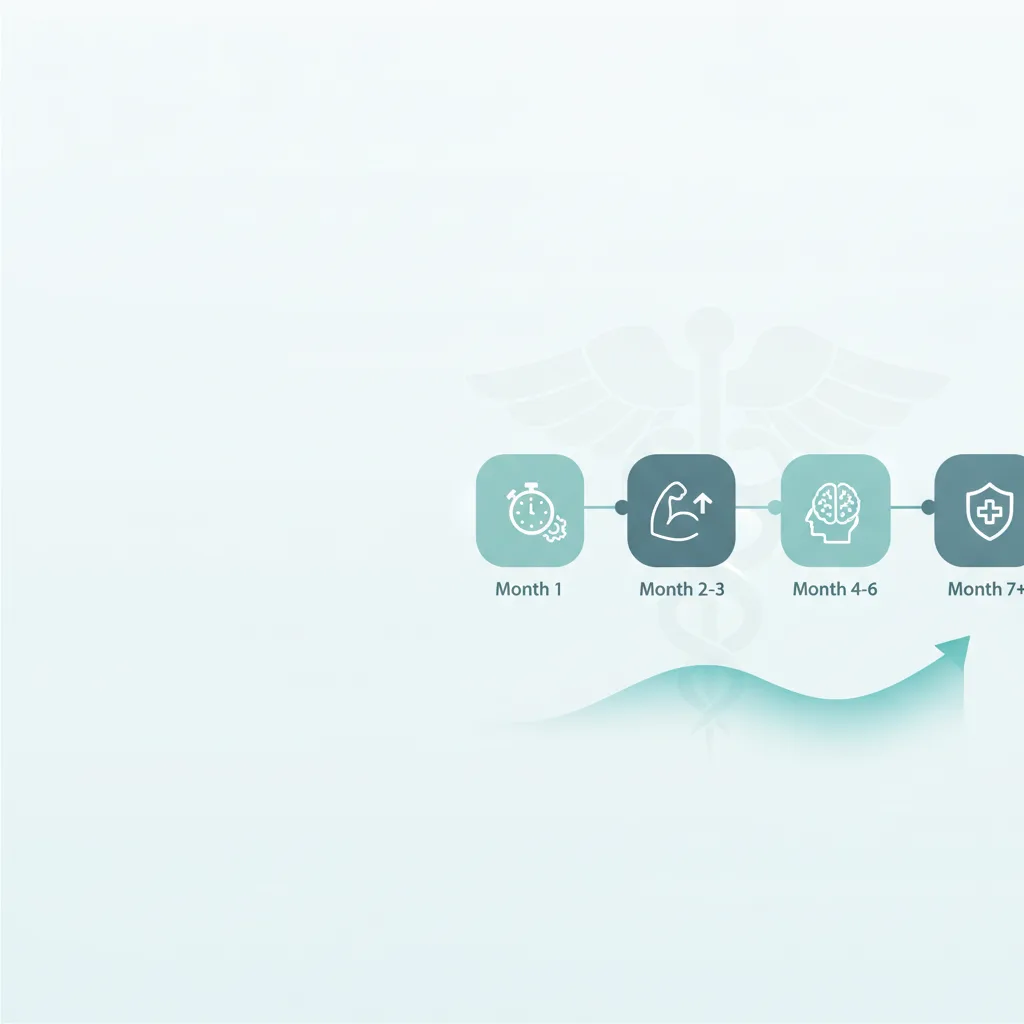
Most men ask what is TRT like before they ask about the science. Here is a realistic timeline based on Endocrine Society guidelines and clinical experience across the clinics in our rankings:
| Timeline | What typically changes |
|---|---|
| 2–4 weeks | Energy levels up, mood stabilizes, morning fog lifting. |
| 4–8 weeks | Libido returns, morning erections more frequent, motivation improves. |
| 3–6 months | Lean mass increases noticeably, fat mass decreases (especially visceral), sleep quality improves. |
| 6–12 months | Bone density stabilizes (measurable by DEXA). Full cardiovascular and metabolic benefit profile emerges. |
What does not happen at physiologic doses: you will not become a bodybuilder. TRT restores what you had at your personal hormonal peak — it does not push beyond your natural ceiling. Most men describe it as feeling like themselves again after years of gradual decline.
For a no-needles version of TRT, see our roundup of TRT without needles.
Is TRT legal to get online in 2026?
Yes — under clear conditions. Testosterone is a Schedule III controlled substance under US federal law, requiring a valid prescription from a licensed US physician. Telehealth prescribing is fully legal when:
- The prescriber is licensed in your state.
- A proper clinical evaluation (labs + symptom review) has been conducted.
- The prescription routes through a US-licensed pharmacy.
The DEA's telehealth prescribing flexibilities are currently extended through December 31, 2026, meaning you can receive testosterone prescriptions via online consultation without an in-person office visit. The Endocrine Society's clinical practice guidelines for testosterone therapy in men with hypogonadism remain the authoritative clinical reference. Every clinic in our rankings operates within this framework.
What is NOT legal: purchasing testosterone from grey-market sources without a prescription, importing unapproved forms from abroad, or self-administering black-market injectables. Beyond the legal risk, the quality and dosing of these products are unverified — a real clinical hazard.
How to get started with TRT online
Now that you understand what is TRT and who it is for, the practical path through a US telehealth clinic looks like this:
- Take the ADAM symptom checklist (available at most clinic intake forms). Three or more "yes" answers signal it is worth pursuing a blood panel.
- Choose a clinic based on your priorities — cost, modality preference, or clinical depth (see table below or our full compare page).
- Complete the intake form and order labs. Most clinics have a same-day online form; your blood draw typically follows within 2–3 days.
- Review results with a clinician. Confirmed low T → prescription. Labs within range → the clinician explains what else may be driving your symptoms.
- Start treatment. Your first shipment typically arrives 7–14 days after prescription.
Top-rated online TRT clinics for first-time patients
| Clinic | Best for | Starting price | Commission-adjusted pick |
|---|---|---|---|
| Male Excel | Needle-free cream, clinical quality 9.0/10 | $99/mo | ⭐ Editors' pick |
| Try Ageless | All 4 modalities, anastrozole + labs included | $129/mo | Best all-inclusive |
| Peter MD | Cheapest multi-modal (gel, nasal, injectable) | $99/mo | Best budget |
| DudeMeds | Cheapest all-in injectable | $77/mo | Best budget injectable |
| MangoRx | FDA-approved oral Kyzatrex + $149 injectable | $149/mo | Best oral option |
Prices verified June 2026. All include clinical consultation and ongoing monitoring unless noted.
Visit Male Excel and start today →
Frequently asked questions about TRT
What is TRT treatment duration — do I have to stay on it forever? Men with primary hypogonadism (the testes cannot produce enough testosterone) typically require TRT indefinitely. Men with secondary hypogonadism (the brain is not signaling the testes correctly, often due to reversible causes like obesity or sleep apnea) may be able to taper off if the root cause is resolved and the axis restarts. Your clinician will guide the decision at 12-month follow-up.
Does TRT affect fertility? Yes. Exogenous testosterone suppresses the LH and FSH signals that drive sperm production. Fertility typically drops significantly within weeks and may not recover for months after stopping. If conceiving is a near-term goal, discuss enclomiphene or HCG co-treatment before starting. The review on MangoRx vs Hims covers enclomiphene in detail as an alternative approach.
Can I get TRT if I have high blood pressure or obesity? These are not automatic disqualifiers. Many men with metabolic syndrome carry secondary hypogonadism, and treating the testosterone deficiency can actually improve insulin sensitivity and body composition over time. Your clinician evaluates the full clinical picture. Starting with labs is the only way to know.
What is the difference between total testosterone and free testosterone? Total testosterone includes all testosterone in circulation — bound to SHBG and albumin plus the free fraction (~2%). Free testosterone is the active, unbound portion. Men with normal total T but high SHBG may have clinically low free T and still qualify for treatment. A complete panel catches this; that is why labs matter, not just a single number.
Is what is TRT different from HRT? They describe the same concept from different angles. HRT (hormone replacement therapy) is the umbrella term applied to both men and women (women's HRT typically involves estrogen and progesterone). TRT is the male-specific term for testosterone replacement. The clinical logic is identical: replace a deficient hormone with a standardized pharmaceutical to restore physiological function.
Top picks · Related reading
- Male Excel Review: Needle-Free TRT Cream, Honest Verdict
- Peter MD Review: Cheapest All-Inclusive TRT ($79/mo)
- MangoRx Review: $99 Injectable & FDA-Approved Oral
- TRT Without Needles: Cream vs Oral Testosterone (2026)
- Does GLP-1 Raise Testosterone in Men?
- Compare all online TRT clinics side-by-side →
Medical disclaimer: This guide is for informational purposes only and does not constitute medical advice. All hormone therapy should be supervised by a licensed US clinician. Some links in this article are affiliate links; commissions never influence our scores or editorial judgments.